Endovenous Laser Treatment (EVLT) in Melbourne
- Home
- Endovenous Laser Treatment (EVLT) in Melbourne
Endovenous Laser Treatment (EVLT) in Melbourne
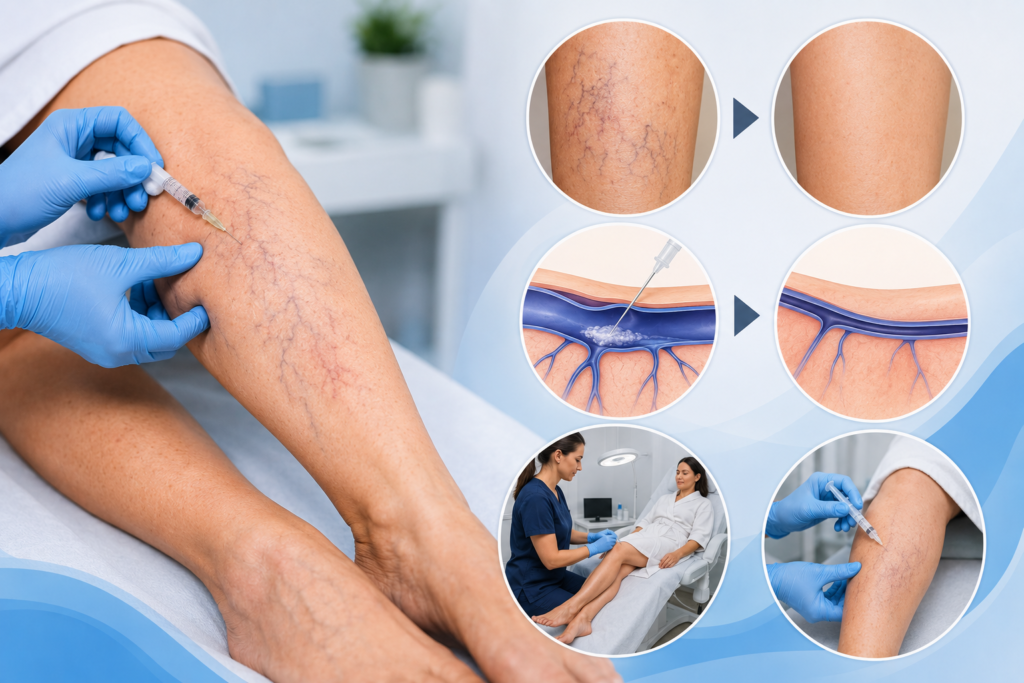
Endovenous laser treatment for varicose veins, commonly called EVLT or EVLA, uses ultrasound guidance and laser energy to close a selected refluxing vein from inside the vessel. It’s considered when clinical assessment and duplex ultrasound confirm the vein anatomy suits endovenous thermal treatment.
Vein Care provides EVLT assessment in Melbourne for patients with symptoms or clinical signs linked to superficial venous reflux. Assessment is what determines whether laser treatment for a suitable refluxing vein, or a different approach entirely, is the right fit.
Key Takeaways
- EVLT treats selected refluxing veins from inside the vein.
- Commonly considered for suitable great or small saphenous veins.
- Duplex ultrasound maps the reflux and guides treatment.
- Typically involves a catheter, laser fibre and local anaesthetic.
- Different from surface laser treatment for small visible vessels.
- Walking is commonly encouraged afterward.
- Recovery, compression, driving and work advice all vary by patient.
- Visible tributary veins may need additional treatment separately.
- Medicare benefits may apply when current MBS requirements are met.
- EVLT can’t prevent every future varicose vein.
For confirmed varicose veins with truncal reflux, NICE places suitable endothermal treatment — including laser or radiofrequency ablation, before ultrasound-guided foam sclerotherapy and surgery in its treatment sequence. Individual suitability and patient preference still shape the actual choice.
What Is EVLT?
EVLT is a minimally invasive procedure that places a laser fibre inside a selected abnormal vein. Controlled laser energy heats the vein from within, closing the treated section. Blood reroutes through other functioning veins, and the closed vein gradually becomes less prominent.
You might also see it called:
- Endovenous laser ablation
- EVLA
- Endovenous laser therapy
- Endothermal laser ablation
- Endovenous laser treatment
“Endovenous” simply means the treatment happens from inside the vein. Unlike traditional vein stripping, the target vein isn’t physically removed through a long surgical incision, NICE describes the procedure as an ultrasound-guided catheter and laser fibre positioned inside the saphenous vein, with laser energy delivered as the fibre is withdrawn.
Which Veins Can EVLT Treat?
Mainly selected superficial truncal veins with confirmed reflux — most commonly the great saphenous vein or small saphenous vein. It can also be considered for certain recurrent or accessory-vein patterns. EVLT generally isn’t used for isolated spider veins or every visible surface tributary.
Great Saphenous Vein
Runs along the inner leg and thigh. When its valves stop functioning properly, backward blood flow increases pressure in connected surface veins.
Small Saphenous Vein
Generally runs along the back of the calf. Reflux here can contribute to varicose veins around the calf, lower leg or behind the knee.
Accessory or Recurrent Refluxing Veins
Previous procedures and individual anatomy can create more complex reflux patterns. Duplex ultrasound determines whether a given vein can be accessed and treated safely.
Visible Tributary Veins
Closing an abnormal truncal vein doesn't automatically remove every visible bulging vein. Remaining tributaries may require:
1.Ambulatory phlebectomy
2.Sclerotherapy
3.Ultrasound-guided sclerotherapy
4.Monitoring and later reassessment
Clinical Note
Current MBS descriptions for EVLT apply to eligible great or small saphenous veins and, where necessary, associated major tributaries.
Learn more about ambulatory phlebectomy and ultrasound-guided sclerotherapy.
How Does EVLT Work?
A catheter and laser fibre are positioned inside the refluxing vein under duplex-ultrasound guidance. Local anaesthetic fluid surrounds the vein, and controlled laser energy is delivered as the fibre is withdrawn, the heat is what closes the treated section.
What it generally involves:
- Mapping the abnormal vein with duplex ultrasound
- Cleaning and preparing the skin
- Local anaesthetic at the access point
- Entering the vein through a small puncture
- Advancing the catheter and laser fibre
- Placing anaesthetic fluid around the target vein
- Activating and withdrawing the laser fibre
- Reviewing the treated vein with ultrasound
- Dressings or compression, where recommended
- Walking and aftercare instructions
Blood keeps returning through other functioning veins once the selected refluxing vein has closed. Healthdirect describes laser ablation as passing a fibre through a catheter into the great or small saphenous vein, withdrawing it while laser energy closes the vessel.
Who May Be Suitable for EVLT?
It’s considered when duplex ultrasound identifies reflux in a treatable superficial truncal vein and the patient has relevant symptoms or clinical signs. Suitability also comes down to vein anatomy, skin condition, mobility, current medicines, blood-clot history, general health and what the patient actually wants from treatment.
What gets weighed during assessment:
- Aching or pain
- Leg heaviness
- Tightness
- Muscle cramps
- Swelling
- Skin irritation
- Discolouration
- Prominent varicose
- veins
- Recurrent
- inflammation
- Previous bleeding
- Venous eczema or other skin changes
- Venous ulceration
EVLT may not be appropriate when:
- The target vein can’t be accessed safely
- The anatomy doesn’t suit thermal treatment
- Acute deep vein thrombosis is present or suspected
- There’s active infection near the access site
- Arterial circulation is significantly impaired
- Mobility after treatment would be genuinely difficult
- Pregnancy affects timing
- Another procedure simply fits the vein pattern better
Is Ultrasound Required for EVLT?
Yes. Duplex ultrasound is used to confirm reflux, map the vein and guide EVLT treatment. Duplex ultrasound is central to assessment, treatment planning and the procedure itself — it identifies which veins reflux, maps their course, checks the deep venous system, and guides catheter and fibre placement. Follow-up ultrasound may also be part of the plan afterward.
What ultrasound mapping can show:
- The vein or veins with reflux
- Where abnormal blood flow starts and ends
- Whether the great or small saphenous vein is involved
- Vein diameter and depth
- Connected tributaries
- Changes from previous treatment
- Deep-vein blood flow
- Possible blood clots
- Anatomical factors affecting access
- Whether a different treatment might actually be more appropriate
NICE recommends duplex ultrasound to confirm the diagnosis and extent of truncal reflux before planning treatment for suspected primary or recurrent varicose veins. Current MBS items 32520 and 32522 specifically require duplex-ultrasound documentation of reflux lasting at least 0.5 seconds in the relevant vein.
Learn more about vascular ultrasound and vein mapping.
What Happens Before, During and After EVLT?
Broadly: medical and ultrasound review beforehand, local anaesthetic and laser fibre placement during, then walking and individual aftercare instructions afterward. The exact process, appointment length and recovery advice depend on your vein anatomy, medical history and treatment plan.
Before EVLT
The clinician will typically:
- Review your symptoms and medical history
- Confirm current medicines and allergies
- Ask about previous blood clots
- Review duplex-ultrasound findings
- Examine and mark the treatment area
- Explain the planned procedure
- Talk through risks and alternatives
- Confirm consent
- Cover compression, transport and aftercare arrangements
Tell the clinic about:
- Prescription medicines
- Anticoagulant or antiplatelet medicines
- Over-the-counter products
- Vitamins, herbal products and supplements
- Previous DVT or pulmonary embolism
- Previous vein procedures
- Pregnancy or breastfeeding
- Heart, lung or neurological conditions
- Arterial circulation problems
- Limited mobility
- Active wounds, rashes or infections
- Planned flights or long journeys
Don’t stop prescribed medicines unless your prescribing doctor or treating clinician specifically tells you to.
During EVLT
What’s involved:
- Cleaning the treatment area
- Local anaesthetic
- Accessing the vein through a small puncture
- Passing a catheter into the target vein
- Positioning the laser fibre using ultrasound
- Local anaesthetic fluid around the vein
- Delivering controlled laser energy
- Withdrawing the fibre through the treated section
- Checking the area with ultrasound
- Dressings or compression
You may feel the local-anaesthetic injections, some pressure, pulling, warmth or temporary discomfort. This varies between patients, EVLT shouldn’t be described as painless.
Immediately after EVLT
The clinician will typically:
- Remove the catheter and laser fibre
- Apply small dressings
- Apply compression, if recommended
- Ask you to walk
- Review your immediate recovery
- Provide written aftercare instructions
- Confirm any clinical or ultrasound follow-up
Healthdirect describes EVLT as a catheter-based procedure using laser energy inside the great or small saphenous vein, and notes anaesthetic arrangements and recovery vary between patients.
What Are the Risks and Possible Side Effects of EVLT?
Possible temporary effects include bruising, tenderness, tightness, swelling, altered sensation or discomfort along the treated vein. Less common complications can include inflammation, infection, skin injury, nerve irritation, blood clots, heat-related clot extension, incomplete vein closure or recurrence. These should all be discussed individually before you consent.
More common or temporary effects
- Bruising
- Tenderness
- Tightness
- Local discomfort
- Mild swelling
- Inflammation
- A firm feeling along the treated vein
- Temporary numbness or tingling
- Skin sensitivity
Healthdirect lists superficial thrombophlebitis, haematoma, altered sensation, skin burns, nerve damage, artery damage, heat-induced thrombosis and recurrence among the possible complications of endovenous ablation.EVLT is not risk-free. The expected effects, uncommon complications, alternatives and your own individual risk factors should all be explained before treatment goes ahead.
Less common complications
- Superficial thrombophlebitis
- Haematoma
- Infection
- Skin burn or skin injury
- Persistent sensory change
- Nerve irritation or injury
- Deep vein thrombosis
- Pulmonary embolism
- Heat-related clot extension towards the deep veins
- Injury to nearby structures
- Incomplete vein closure
- Reopening of the treated vein
- Recurrent venous reflux
How Does EVLT Differ From Surface Laser Treatment?
EVLT places a laser fibre inside a refluxing vein and uses ultrasound to guide treatment. Surface or transdermal laser instead directs energy through the skin toward selected small visible blood vessels. Surface laser doesn’t treat deeper truncal reflux the same way and isn’t interchangeable with EVLT.
| Feature | EVLT | Surface Laser Treatment |
|---|---|---|
| Treatment Location | Inside the vein | Through the skin |
| Typical Target | Refluxing superficial truncal vein | Selected small visible vessels |
| Ultrasound Guidance | Required | Not generally used the same way |
| Catheter & Fibre | Inserted into the vein | No endovenous catheter |
| Anaesthetic | Local anaesthetic commonly used | Depends on the device and area |
| Main Purpose | Treat selected truncal reflux | Treat selected surface vessels |
EVLT Recovery and Aftercare
Recovery varies by the vein treated, whether other procedures happened at the same time, compression requirements, occupation and individual response. Walking and light movement are commonly encouraged; driving, strenuous exercise, work and travel should follow whatever’s specified for your particular procedure.
Healthdirect notes most patients go home the same day as endovenous ablation and return to normal activities as directed by their treating team.
Walking and movement
Typical advice:
- Walk soon after treatment
- Take regular short walks
- Avoid sitting still for long periods
- Avoid standing motionless for extended periods
- Build activity up gradually
- Follow any procedure-specific exercise limits
Driving
Depends on:
- Which leg was treated
- Leg movement and comfort
- Compression garments
- Anaesthetic or medicines used
- Whether pedal control is affected
- Whether you can perform an emergency stop safely
Confirm transport and driving arrangements before treatment day.
Returning to work
Desk-based duties are often possible sooner than work involving:
- Heavy lifting
- Repeated squatting
- Prolonged standing
- Extensive walking
- Driving
- High temperatures
- Limited movement breaks
The clinic should base this advice on what was actually done and what your job actually involves.
Exercise
Gentle walking is a different thing entirely from strenuous exercise. Running, heavy resistance training, high-impact activity and demanding lower-body work may need to wait for whatever period your clinician advises.
Compression
May be recommended, though the garment and wearing period vary. Worth confirming:
- Whether compression is needed at all
- Knee-high or thigh-high length
- The prescribed compression level
- Whether it stays on overnight
- When it can come off for showering
- How long total
- What to do if it gets wet or loose
- Which symptoms need clinical advice
Contact the clinic if compression causes severe pain, persistent numbness, cold toes, unusual skin colour, marked swelling, or trouble walking safely.
Follow-up ultrasound
Clinical review or duplex ultrasound may assess:
- Closure of the treated vein
- Deep-vein blood flow
- Bruising and tenderness
- Areas of inflammation
- Altered sensation
- Residual tributary veins
- Ongoing symptoms
- Whether more treatment makes sense
If symptoms are worsening or unexpected, contact the clinic before your scheduled review rather than waiting.
How Many EVLT Appointments May Be Required?
Often more than one, consultation, duplex-ultrasound mapping, treatment, and follow-up. Extra visits may come up when both legs are affected, multiple veins have reflux, previous procedures have changed the anatomy, or visible tributaries need separate treatment.
A typical pathway:
- Initial consultation
- Duplex-ultrasound mapping
- Treatment planning
- EVLT procedure
- Clinical or ultrasound review
- Treatment of remaining tributary veins
- Later reassessment, where indicated
What affects the number of appointments:
- One leg or both
- Number of refluxing veins
- Great, small or accessory saphenous involvement
- Previous treatment
- Recurrent reflux
- Associated visible tributaries
- Healing and follow-up findings
- Whether another procedure is needed
Not every visible vein can necessarily be handled in one appointment.
Can Varicose Veins Return After EVLT?
EVLT can close the selected refluxing vein, but it can’t prevent every future varicose vein. New reflux can develop in other veins, untreated tributaries can stay visible, or the treated vein itself can reopen. Worth reassessing if symptoms, swelling, skin changes or prominent veins come back.
Possible reasons for recurrent or new veins:
- Progression of venous disease generally
- Reopening of a treated vein
- Reflux developing in another truncal vein
- Untreated tributary veins
- New accessory-vein reflux
- Pregnancy
- Hormonal factors
- Family history
- Ageing
- Anatomy left behind by previous treatment
Healthdirect notes continued or recurrent varicose veins can occur after endovenous ablation, and another procedure is sometimes needed. EVLT is best understood as treatment for selected current reflux, not a permanent cure for every future vein problem.
How Does EVLT Compare With Other Varicose Vein Treatments?
EVLT uses laser heat, radiofrequency ablation uses radiofrequency energy, ultrasound-guided sclerotherapy uses a chemical sclerosant, and vein glue uses medical adhesive. Ambulatory phlebectomy removes selected surface tributaries. What’s right depends on symptoms, anatomy, ultrasound findings, risks and what the patient prefers.
This comparison explains commonly discussed approaches generally, it doesn’t imply every option is available at Vein Care.
Treatment | Common role |
EVLT or EVLA | Selected refluxing superficial truncal veins |
Radiofrequency ablation | Selected truncal veins treated with thermal energy |
Ultrasound-guided sclerotherapy | Selected deeper veins treated chemically |
Vein glue | Selected truncal veins closed with medical adhesive |
Ambulatory phlebectomy | Selected raised surface tributaries |
Direct-vision sclerotherapy | Selected smaller visible veins |
Compression | Symptom management, or where intervention isn’t suitable |
Surgery | Considered when less invasive options aren’t suitable |
NICE places endothermal ablation first in its treatment sequence for suitable confirmed truncal reflux, followed by ultrasound-guided foam sclerotherapy and surgery when earlier options aren’t suitable.
What Does EVLT Cost in Melbourne?
Depends on the consultation, duplex ultrasound, number of veins treated, whether one or both legs are involved, any associated procedures, compression garments and follow-up. A personalised estimate comes after assessment, a headline online price simply can’t reflect a complete treatment plan.
Worth asking whether the estimate includes:
- Initial consultation
- Duplex ultrasound
- EVLT procedure
- Local anaesthetic
- Compression garments
- Treatment of tributary veins
- Follow-up ultrasound
- Clinical review
- Additional treatment sessions
- Medicare rebate processing
- Facility or consumable fees
- Expected out-of-pocket costs
The clinic fee and the Medicare benefit aren’t necessarily the same thing, and the benefit may not cover the full cost.
Does Medicare Apply to EVLT?
A Medicare benefit may apply when current MBS requirements are met. Eligibility generally comes down to duplex-confirmed reflux, relevant symptoms or clinical signs, which vein is being treated, and other item conditions. Treatment performed purely for cosmetic reasons may not meet these requirements.
The relevant items currently are:
- Item 32520: laser treatment of an eligible great or small saphenous vein in one leg
- Item 32522: laser treatment of eligible great and small saphenous veins in one leg
Both require ultrasound-documented reflux of at least 0.5 seconds and significant signs or symptoms attributable to venous reflux.
Vein Care can talk through:
- Whether your proposed service likely meets current MBS requirements
- Which item may apply
- Clinic fees
- Possible Medicare benefits
- Expected out-of-pocket costs
- Whether related procedures are billed separately
- Whether a referral is needed for your specific arrangements
Confirm Medicare eligibility after clinical assessment, it shouldn’t be promised before your vein pattern and symptoms are actually known.
When Should Urgent Care Be Sought After EVLT?
Contact the treating clinic promptly if pain, swelling, redness, discharge, bleeding or skin changes are getting worse rather than better. Seek urgent assessment for sudden one-sided leg swelling or severe calf pain. Call Triple Zero (000) for chest pain, severe breathlessness, coughing blood, fainting or collapse.
Contact the clinic promptly for:
- Increasing local pain
- Spreading redness or warmth
- Worsening swelling
- Wound discharge
- Fever
- Blistering or skin breakdown
- Persistent numbness
- Significant bleeding
- Anything that doesn’t match your written instructions
Seek urgent medical assessment for:
- Sudden one-sided leg swelling
- Severe or increasing calf pain
- Marked redness, tenderness or warmth
- Rapidly worsening leg symptoms
Pain and swelling in the calf or thigh can signal deep vein thrombosis.
Call Triple Zero (000) for:
- Chest pain
- Sudden or worsening difficulty breathing
- Coughing up blood
- Fainting or collapse
- Signs of a severe allergic reaction
Healthdirect advises calling 000 for breathing difficulty, chest pain, palpitations, fainting or coughing up blood, since these can signal pulmonary embolism.
Clinical Approach at Vein Care
Treatment recommendations start with understanding the source and pattern of venous reflux. A visible bulging vein might be connected to an abnormal truncal vein in one patient, while another patient’s anatomy is better managed with sclerotherapy, phlebectomy, vein glue, compression or simply monitoring.
What factors into treatment planning:
- Symptoms
- Duplex-ultrasound findings
- Vein anatomy
- Skin condition
- Previous procedures
- Blood-clot history
- Mobility
- Medicines
- Possible risks
- Expected limitations
- Alternative management options
- Patient preferences
Learn more about Vein Care.
A Clinical Note From Dr Gurjit Dhillon
EVLT is considered only when clinical assessment and duplex ultrasound identify a vein pattern suitable for endovenous thermal treatment. Treatment planning should also address expected recovery, possible side effects, less common complications, alternative options and whether visible tributary veins may require separate treatment.
Dr Gurjit Dhillon, Phlebologist, M.B.B.S., F.A.C.P.
Where Can I Arrange an EVLT Assessment in Melbourne?
Vein Care offers appointment-based assessment across Camberwell, Sydenham and Boronia. Clinical examination and duplex-ultrasound mapping are what determinewhether EVLT or another treatment approach may be clinically appropriate
Address : Suite 307, 685 Burke Road Camberwell VIC 3124
Hours
Monday – Friday
9:00 AM – 5:30 PM
Address
574 Melton Hwy
Sydenham VIC 3037
Hours
Monday – Friday
9:00 AM – 5:30 PM
Address
157 Scoresby Rd
Boronia VIC 3155
Hours
Call ahead to confirm availability.
Frequently Asked Questions About EVLT
EVLT is considered only when clinical assessment and duplex ultrasound identify a vein pattern suitable for endovenous thermal treatment. Treatment planning should also address expected recovery, possible side effects, less common complications, alternative options and whether visible tributary veins may require separate treatment.
Dr Gurjit Dhillon, Phlebologist, M.B.B.S., F.A.C.P.
EVLT, or endovenous laser treatment, is a minimally invasive procedure used to close selected refluxing veins in the legs. A laser fibre is positioned inside the abnormal vein under ultrasound guidance, and controlled heat is applied as the fibre is withdrawn. Blood continues through other functioning veins.
Yes. EVLT and EVLA generally describe the same type of treatment. EVLT means endovenous laser treatment, while EVLA means endovenous laser ablation. Both terms refer to placing a laser fibre inside a selected refluxing vein and using heat to close it.
EVLT is a minimally invasive endovenous procedure rather than traditional vein-stripping surgery. It involves a small skin puncture, a catheter and a laser fibre. Local anaesthetic is commonly used, although the precise treatment and anaesthetic arrangements depend on the patient and procedure plan.
During EVLT, duplex ultrasound guides a catheter and laser fibre into the selected abnormal vein. Local anaesthetic fluid is placed around the vein, and laser energy is delivered as the fibre is withdrawn. The treated vein closes, allowing blood to reroute through other functioning veins.
EVLT is mainly used for selected refluxing superficial truncal veins, commonly the great saphenous vein or small saphenous vein. It is not generally used for isolated spider veins. Visible tributary veins may require separate treatment such as sclerotherapy or ambulatory phlebectomy.
EVLT is not generally used for isolated spider veins because it treats selected refluxing veins beneath the skin. Spider veins and smaller surface vessels may be managed using sclerotherapy or, in some circumstances, surface laser treatment. Assessment helps identify whether deeper reflux is contributing to visible veins.
Yes. Duplex ultrasound is used to confirm venous reflux, identify the affected vein, assess the deep veins and plan treatment. Ultrasound also guides placement of the catheter and laser fibre during EVLT. Suitability cannot be determined from the visible appearance of a varicose vein alone.
EVLT may be considered when ultrasound confirms reflux in a vein that can be treated using endovenous laser energy. Suitability also depends on symptoms, vein anatomy, mobility, skin condition, medicines, previous blood clots, general health and whether another treatment would better match the vein pattern.
Experience varies. Local anaesthetic is commonly used, but patients may feel injections, pressure, pulling, warmth or temporary discomfort during treatment. Bruising, tenderness, tightness or altered sensation can occur afterward. EVLT should not be described as painless or completely free from discomfort.
Treatment time depends on the number and length of veins treated, whether one or both legs are involved and whether another procedure is performed at the same appointment. The clinic can provide a more useful estimate after clinical examination and duplex-ultrasound mapping.
Walking is commonly encouraged after EVLT. Patients may be asked to walk soon after treatment and continue regular gentle movement during recovery. Avoid prolonged immobility and follow the clinician’s instructions about strenuous exercise, compression and any restrictions specific to the procedure performed.
Recovery varies according to the vein treated, associated procedures, compression requirements, occupation and individual response. Many patients leave on the day of treatment and resume light activities relatively soon, but strenuous exercise and physically demanding work may need to wait for the period advised.
Driving advice depends on which leg was treated, discomfort, compression garments, medicines and whether the patient can operate the vehicle safely. Do not drive until you can control the pedals and perform an emergency stop comfortably. Confirm transport arrangements with the clinic before treatment.
Return-to-work timing depends on recovery and job demands. Desk-based work may be possible sooner than work involving heavy lifting, prolonged standing, extensive walking or driving. The treating clinician should provide advice based on the treatment performed and the physical requirements of the patient’s role.
Compression may be recommended after EVLT, but the garment, compression level and wearing period vary. Follow the instructions supplied by the treating clinic. Contact the clinic if compression causes severe pain, persistent numbness, cold toes, unusual skin colour or difficulty walking safely.
Possible effects include bruising, tenderness, tightness, mild swelling, inflammation and temporary altered sensation. Less common complications may include infection, skin injury, nerve irritation, superficial thrombophlebitis, deep vein thrombosis, pulmonary embolism, heat-related clot extension or incomplete vein closure.
No. EVLT is a medical procedure and carries possible side effects and complications. Individual risk depends on the vein treated, anatomy, medical history and treatment plan. Expected effects, less common complications, alternative treatments and aftercare requirements should be discussed before consent.
The laser-treated vein closes and no longer carries the abnormal refluxing blood flow. Blood is redirected through other functioning veins. The treated vein is gradually remodelled by the body and may become less prominent over time, although visible tributary veins can remain and may require separate treatment.
Yes. EVLT can close the selected refluxing vein, but it cannot prevent all future varicose veins. New reflux may develop in another vein, untreated tributaries may remain visible, or a treated vein may reopen. Further assessment may be appropriate if symptoms or prominent veins return.
Neither treatment is appropriate for every vein pattern. EVLT is commonly used for selected refluxing truncal veins, while sclerotherapy uses a liquid or foam sclerosant for suitable surface, tributary or deeper veins. Duplex-ultrasound findings and clinical assessment help determine which treatment may be appropriate.
EVLT places a laser fibre inside a refluxing vein under ultrasound guidance. Surface or transdermal laser directs energy through the skin towards selected small visible vessels. Surface laser does not treat deeper truncal reflux in the same way and is not interchangeable with EVLT.
EVLT cost in Melbourne depends on consultation fees, duplex ultrasound, the number of veins or legs treated, associated procedures, compression garments and follow-up. A personalised estimate should be provided after assessment because a single advertised price may not represent the complete treatment plan.
A Medicare benefit may apply when current Medicare Benefits Schedule requirements are met. Eligibility generally depends on duplex-confirmed reflux, relevant symptoms or clinical signs, the vein being treated and other item conditions. Treatment undertaken solely for cosmetic reasons may not qualify.
Vein Care provides appointment-based assessment through Camberwell, Sydenham and Boronia. Clinical examination and duplex-ultrasound mapping are used to determine whether EVLT or another treatment approach may be clinically appropriate.